
Description
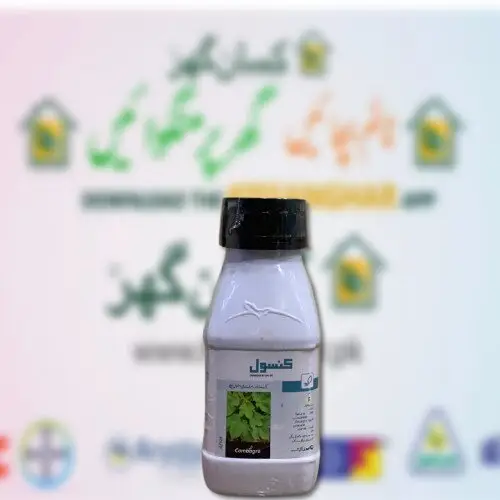
## **Console 37.5%SC
Spinosad + Chlorfenapyr
Insecticide Combination**
#### **1. Overview & Mode of Action**
– **Spinosad** (Naturalyte class)
– Derived from *Saccharopolyspora spinosa* bacteria.
– Targets nicotinic acetylcholine (nAChR) and GABA receptors → hyperexcitation, paralysis, death.
– Effective against **thrips, caterpillars, leafminers, fruit flies, and beetles**.
– **Chlorfenapyr** (Pyrrole class)
– Pro-insecticide (activated metabolically inside pests).
– Disrupts mitochondrial ATP production → energy depletion, lethargy, death.
– Strong against **mites, whiteflies, aphids, and resistant pests**.
#### **2. Combined Benefits**
– **Broad-Spectrum Control**: Covers chewing & sucking pests with **two distinct modes of action**.
– **Resistance Management**: Reduces risk compared to single-mode insecticides.
– **Long-Lasting Effect**: Chlorfenapyr provides residual activity, while spinosad offers quick knockdown.
#### **3. Target Pests & Crops**
– **Primary Pests**:
– Thrips (including resistant strains),
– Spider mites,
– Armyworms,
– Leafminers,
– Whiteflies (nymphs/adults).
– **Common Crops**:
– Vegetables (tomatoes, peppers),
– Fruits (grapes, citrus),
– Cotton,
– Ornamentals.
#### **4. Application Guidelines**
– **Dosage**: Follow label rates (e.g., 0.3–0.5 L/ha for pre-mix formulations).
– **Timing**: Apply at early infestation stages (better on larvae/nymphs).
– **Method**: Foliar spray (ensure full coverage; spinosad works via ingestion/contact).
#### **5. Advantages & Limitations**
✔ **Pros**:
– Highly effective against resistant pests.
– Lower bee toxicity (spinosad safer than neonicotinoids).
– Works in IPM (if used judiciously).
✖ **Cons**:
– **Toxic to aquatic life** (both chemicals).
– Moderate toxicity to beneficial insects (avoid overuse).
– Chlorfenapyr harmful to predatory mites.
#### **6. Resistance Management**
– Rotate with **non-cross-resistant** chemicals (e.g., IGRs, diamides).
– Avoid consecutive applications (>2 sprays/season).
Reviews
There are no reviews yet.